
Why Algarve?
If you’ve scrolled through Instagram within the last year or so, then you already know that Portugal is the place to go. It has turned up on more must-visit lists lately than nearly anywhere else. And no wonder—the sun-soaked, western sliver of southern Europe has much to offer: rich culture, beautiful architecture, and a dazzling culinary scene. (Not to mention the well-styled hotels that are the stuff of social media dreams.) While scores of travelers are drawn to the vibrant cities of Lisbon and Porto, would-be visitors should also look to the south—namely, the Algarve region—for an under the radar coastal retreat that’s full of authentic Portuguese pleasures.
Although equal in beauty to neighboring Mediterranean mainstays like Majorca and St.-Tropez, the Algarve is still enjoying relative obscurity—but with glittering new resorts popping up along the coastline, a handful of Michelin-starred restaurants, and a delicious type of wine you won’t find anywhere else, it’s only a matter of time before that’s no longer the case.
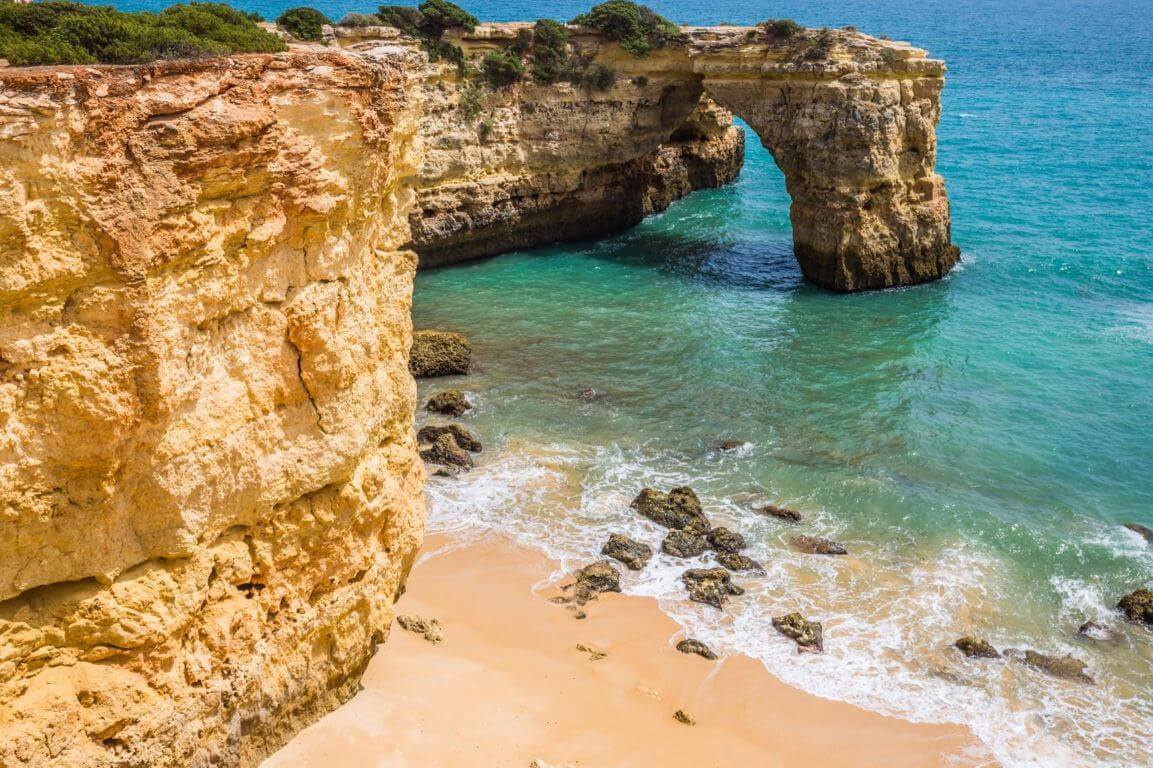
What to DoBeaches are the biggest draw, with more than 150 rolling out their wide, golden shores like welcome mats. Many are bordered by craggy rock cliffs and caves for an extra photogenic effect. Falesia and São Rafael beaches, both in Albufeira, see their fair share of sunbathers, and Praia da Amoreira, in Aljezur, is a sweet spot for surfers, thanks to its abundant waves. If you’re searching for that quintessential crescent of Algarvian sand, make your way to Praia da Marinha in Lagoa, one of the Algarve’s most celebrated beaches. But rather than drive right up, arrive via the cliff top walk that starts at Praia do Vale de Centeanes in Carvoeiro, some three-and-a-half miles away.
The Atlantic coast isn’t the only place to enjoy the water in the Algarve. Ria Formosa nature park, with its lagoons, sand dunes, islands, marshes, and mudflats, makes for exceptional hiking and spotting wildlife.
The Algarve has one of the best climates in Europe, all year round. With little rainfall, generally occurring between the months of November and March, and plenty of sunshine, the Algarve offers outstanding weather conditions for year-round tourism.
Temperatures are high in summer, which is one reason why the Algarve is a top “sun and sea” destination and an authentic paradise for beachgoers. The region’s beaches, stretching for many kilometres along the coast, consist of fine, golden sand, and the sea is calm, with temperatures of around 22ºC in the summer.
Due to its terrain and geographical location, the Algarve is influenced by various climates: from the continent of Europe to the north of Africa, and from the Atlantic Ocean to the Mediterranean Sea. Maximum temperatures vary between 15ºC and 31ºC over the course of the year. In winter, temperatures do not drop below zero and the sunny days draw many tourists from the colder countries in northern Europe at this time of year.
Average temperatures
Air temperature in summer: 24ºC to 29ºC
Air temperature in winter: 15ºC to 18ºC
Sea temperature in summer: 21ºC to 24ºC
Sea temperature in winter: 15ºC to 19ºC
Related Posts
This Post Has 0 Comments